
"Is Sri Lanka safe?" is the question we are asked more than any other, usually by somebody who has just found a good flight and then read a headline. Here is the honest answer — written to stay true over time rather than to describe one particular week.
Start with official advice, not with a surf camp
No surf camp should be your primary source on national security, and that includes us. Before you book, read your own government's current travel advice for Sri Lanka: the Foreign Office if you are British, the Auswärtiges Amt if you are German, or your national equivalent. They are updated continuously, they cover the island region by region, and your travel insurance is usually written to match them.
What we can tell you is what daily life on the south coast is actually like, because that is where we live and work.
What the south coast is actually like
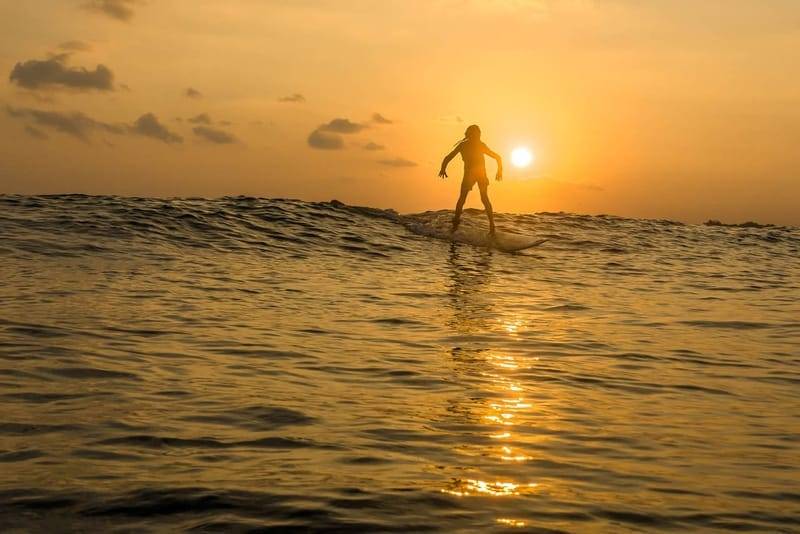
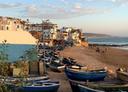
Weligama is a fishing and surf town about 150 km south of Colombo. It is essentially one road, a wide bay, a working fishing harbour and a few hundred small businesses. Our guests walk to the beach at six in the morning and back from dinner at ten at night, all season long, and what most of them remember afterwards is how unremarkable that felt.
Serious crime against visitors is uncommon here. The things that actually catch people out are ordinary travel risks — and they are worth taking seriously precisely because they sound boring.
The risks that actually matter
Sun. You are roughly three degrees off the equator. The heat does not feel extreme, which is exactly why people burn badly on day one. Reef-safe sunscreen, a rash guard in the water, and shade in the middle of the day.
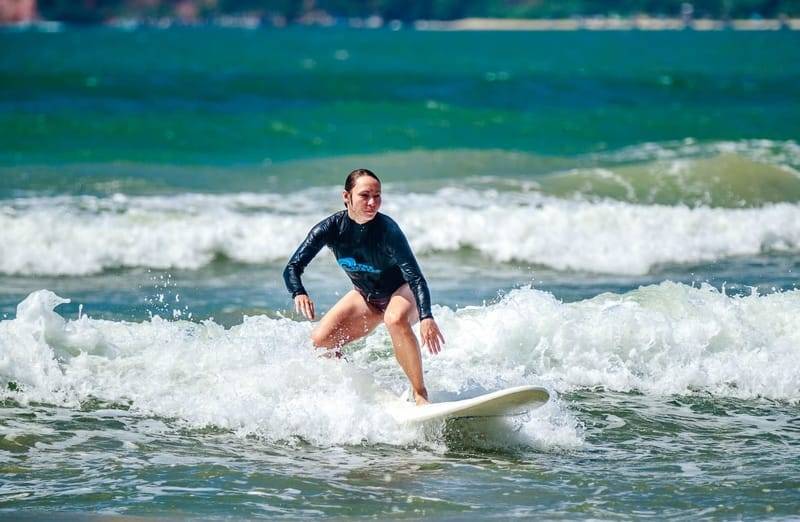
The ocean. Weligama Bay is a sandy-bottom beach break with no reef, which is why it became the island's main beginner bay — but every ocean has currents. Surf where other people are surfing, keep your leash on, and if you are unsure, take a guided session instead of paddling out alone.
Traffic. The most likely way to get hurt in Sri Lanka is a scooter. The roads are busy, overtaking is enthusiastic, and renting a scooter without the correct licence usually also means riding without valid insurance. Tuk-tuks and arranged transfers cost very little by comparison.
Food and water. Drink bottled or filtered water and eat where it is busy. Sri Lankan food is one of the best reasons to come; the risk is an empty restaurant, not a spicy one.
Getting there and getting around
Almost everyone flies into Bandaranaike International Airport (CMB), north of Colombo. Weligama is about 150 km south — roughly two and a half to three hours on the E01 southern expressway. We arrange private transfers for arriving guests, which after a long-haul flight is the simplest way to start.
Once you are here the coastal train, buses and tuk-tuks all run. The south-coast train is one of the genuinely lovely things about this island and easily worth a day of your week.
Visas and paperwork
Most visitors need to arrange entry authorisation before travelling, and both the process and the fee have changed more than once in recent years. We deliberately do not print the current rules on this page, because any page that does is wrong within a year. Check the official Sri Lankan immigration service, and check it close to your departure date rather than on the day you book.
Travelling alone
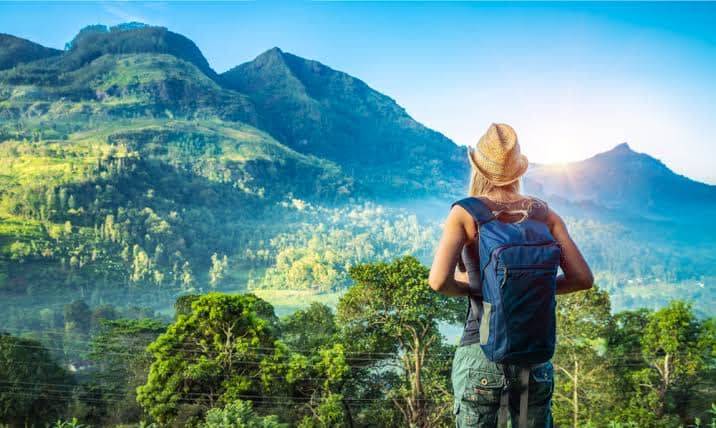
A large share of our guests arrive on their own, and many of them are women travelling solo. The structure of a camp week is what makes that straightforward: you arrive into a group that is already eating together, surfing twice a day together and heading to the same things in the evening. You are independent when you want to be, and never left working out dinner by yourself.
What we do at our end
Every surf session is run by an ISA-certified instructor with groups capped at four students, and sessions are scheduled around the tide and the wind rather than around a timetable. Airport transfers are arranged rather than left to chance, and there is always someone at the camp who knows the coast.
If you are weighing up a trip, our FAQ covers the practical questions in more detail, you can see what a week costs on the 2026 rates page, and the camps themselves are The Surfer Beach Camp, TS2 Camp and Soul Surfer Camp.
Written by The Surfer Surf Camps Team
Surf camp operators, Weligama, Sri Lanka
The team running three surf camps on Weligama Bay in southern Sri Lanka, in the water on this coast every day of the November-April season.
Ready to ride?
Book your surf experience with The Surfer